The Big Switch by Nicholas Carr

8 03 2010

bigswitchcover2thumb By accident I picked up The Big Switch – Rewiring the world, from Edison to Google by Nicholas Carr.  I had nothing to read and saw the book laying at one of the hotels we were passing through without knowing anything about the book beforehand.  I really liked the book as it got me thinking about things that I hadn’t given too much thought before – and a bit of thinking is always good :)

In this the book the author discusses where computer technology and the internet are heading in the next few years. 

In the first part of the book the author talks about the development of electricity, how the production and distribution of electricity moved from a decentralized model where each company produced it’s own electricity to becoming a general utility delivered through a centralized network that anyone can tab into, cheaply and effortlessly.  The author then argues that computers, hardware and software and services, are heading the same way that electricity did – towards commoditization of IT.  This form of utility computing or cloud computing he calls the World Wide Computer – where computer networks talk together to create some form of a super computer for all to use.  We have seen this development in recent years with increasing number of services delivered “in the cloud” both to individuals and corporations.

In the second part of the book the author discusses what these changes really mean in a social and economic context.  He argues that today it might be the public that is profiting the most from the World Wide Computer through free services like facebook, Gmail and others.  But in the end everything is money driven and corporations will get a hold of this new arena, maybe at our expense.  However the development will unfold the change to utility computing will profoundly change our society as much as electricity did in the 19th century.

As I said in the beginning, I really liked this book as it brought ideas to my attention that I had not thought that deeply about before.  Even though you might not agree with the author on every point, the book is an interesting read that get you thinking about the future of the internet and computing in general and give you an idea about where future opportunities might await and what to avoid.

I would say that this book is a must read for all IT professionals.  It should also be very interesting for people interested in the internet and want to keep up with the latest development.  It is very accessible without much technical jargon so anyone should be able to pick it up and read – and enjoy.


Lost on Planet China by J. Maarten Troost

24 02 2010

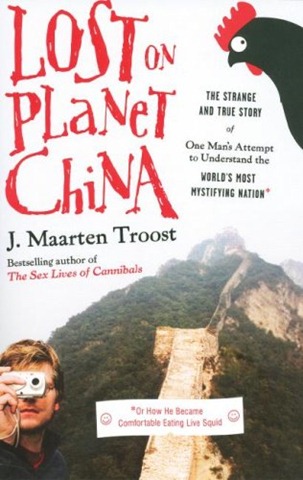
lost1 The full title of the book, that sets the tone “Lost on Planet China: The Strange and True Story of One Man’s Attempt to Understand the World’s Most Mystifying Nation or How He Became Comfortable Eating Live Squid” …no more and no less.  I listened to the audio book, read by Simon Vance.

The book is the author’s third travel book.  His other titles are Getting Stoned with Savages: A Trip Through the Islands of Fiji and Vanuat and The Sex Lives of Cannibals: Adrift in the Equatorial Pacific.

His last book is a tale of the authors travels through China.  In the prefix the authors talks about wanting to move to China so the book really tells of his reconnaissance trip to investigate how it would be to move with a family of four to China.  The author spends a few months traveling through China – north to south and east to west.  He explores both the backpacking scene and on a few occasions travels “business style”.

This is a very interesting book for anyone interested in China and especially for those that want to or are planning to visit China as the author visits a lot of places in China and gives his honest opinion of them all.  He is not trying to sugar-coat anything and if he thinks a place is crappy he will say so.

I really liked the book but there were two things that bothered me.  Firstly, I found the author to be very negative for the most part of the book, it is not until he travels to western China that he finds anything he likes.  Maybe that is his honest opinion but I think that when you are traveling your mood will change how you perceive a place and for the first half of the book the author does certainly seem in a pessimistic or negative mood.  Secondly, I found that the author tries too hard to be funny.  As seen on the book titles, the author is a funny guy and in this book you can really tell that he is trying hard to keep up his funny remarks and witty jokes.  The reader of the audio book tries also to put his dramatic mark on the book and having those two trying to be dramatic and funny was a bit too much for me.

Just to sum this up, the book is really interesting for people with a keen interest in China and might be going there in the future but the others should rather tune into something else.

—–

Update: Here you can see my re-review of the book after travelling in China for three weeks.


Wisdom Walk by Sage Bennet, PhD

19 02 2010

WisdomWalk A full name of the book is: Wisdom Walk – Nine Practices for Creating Peace and Balance from the World’s Spiritual Traditions.  This is not the kind of book that I would typically read – or even been seen holding for that matter.  Elínborg was given the book before we went to Asia and in the spiritual atmosphere that clearly persist here I was intrigued by the fact that I could learn about eight different religions in one book – so I grabbed it, read it, and ended up really liking it (but don’t tell anyone).

The book is written by Sage Bennet.  On hr credit list she has a doctorate in Philosophy, she has been a minister for eight years, she has thought classes on religious matters in universities across the United States for twenty five years and she has a private practice offering spiritual counseling and coaching. So we can assume that she has given the subject a bit of thought :)

The book is divided into nine chapters and in each chapter the author talks about one religion and highlights one wisdom taken from that particular religion.  In the last chapter she talks about a wisdom that she claims comes from all the eight religions. The religions and wisdoms that the author has selected are:

  • From Hinduism – Create a home altar.
  • From Buddhism – Meditate and find peace.
  • From Islam – Surrender to prayer.
  • From Christianity – Forgive your self and others.
  • From Judaism – Make time for Sabbath.
  • From Native American Spiritualism – Let nature be your teacher.
  • From Taoism – Go with the flow.
  • From New Thought – Catch God’s vision of your life.
  • From all traditions – Offer your self in service to others.

The author takes the reader on a spiritual journey where each wisdom step is explained and examples given, both from the authors life and others, on how that particular wisdom step can help us in the spiritual life or to put is simply how this wisdom step can help us with the things that happen within our own heads.  It is difficult to explain properly the content of the book but I just want to stress that this is not about some mumbo jumbo mystic dance around the fire stuff but small steps that we can make in our lives to gain more balance and stability in our lives – believe it or not :)

Now as I said in the beginning, I never thought that I would be interested in a book like that but I really enjoyed reading it and I’m sure that I will use some of the wisdom steps in my own life when we come back home from Asia.  I think that before I read the book I didn’t really know what was meant by the word spiritualism and just dismissed it as “some nonsense” but at least now I know.  I would highly recommend this book to anyone that has an open mind and is interested in learning about different religions and if you have any interest in spiritual things, this book should definitely be for you.


The Catcher In The Rye by J.D. Salinger

15 02 2010

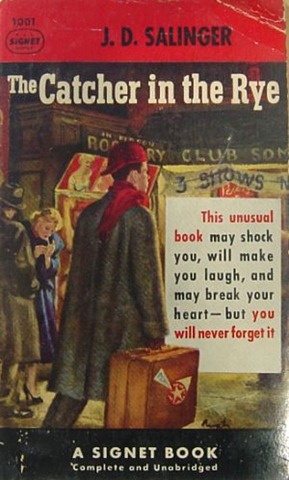
salingercatcher I listened to The Catcher in The Rye as an audio book read by Ray Hagen.  The setup of the book was great and the reading was more like acting than plain reading and I enjoyed it very much.

The story it self is about Holden Cowfield, a sixteen year old native New Yorker, that had just been sacked from his third prep school.  Instead of going straight home he wonders around New York city for three days.  Holden is the narrator in the story and we get to know his thoughts and reactions to the people he meets.  We get to learn that Holden is a very disgruntled young man that doesn’t seem to like anything at all.  I would guess that the story takes place in the fifties or even sooner.

I’m not familiar with the standing of The Catcher in the Rye in American literature, at least I have heard it quoted or referred to numerous times and that is the reason I decided to give it a try.

Even though it is interesting to look at the life of a teenager at that time I never got invested in the story.  How often I fell asleep right after hitting that play button paints an accurate picture of how interested I was.  The problem for me was that I never got invested in Holden’s life, I didn’t really care how things turned out for him.  Even though the book is well written and the use of language is quite entertaining the story just wasn’t strong enough for me.  It would be interesting to hear from someone that has really enjoyed the story, what angles am I missing?  Is this book perhaps read in American schools?  I’m all ears!


The Damage Done by Warren Fellows

14 02 2010

DamageDone The Damage Done – Twelve Years of Hell in a Bangkok Prison – is a written by Warren Fellows, a former heroin smuggler that was caught smuggling heroin from Thailand to Australia.  After a long trial he was sentenced to life imprisonment and he was to remain in a Thai prison for the next twelve years.  Fellows accepts that he was guilty for the crimes he was sentenced for but the punishment seems way too harsh.  Fighting cockroaches, sewer rats, the other inmates and the sadistic guards seems as inhuman as it gets.  A grave warning for anyone wanting to break the Thai laws.
Obviously Fellows is not a seasoned writer, I think this is his first and only book, but the story is really interesting and it is difficult to to put it down once you have started and therefore it is easy to look past the faults in the storytelling and language use.

The story has its disgusting parts so keep the light on and be happy that you are where you are and remember all those that might not have it as good as you – be that self inflicted or not.

I would recommend this book to anyone interested in Thailand, planning to visit Thailand or has been in Thailand.  Especially I would recommend the book to anyone thinking about smuggling drugs in or out of Thailand.


Winning by Jack Welsh

5 02 2010

To break up the travel blog I have decided to write about the books that I read during the trip.

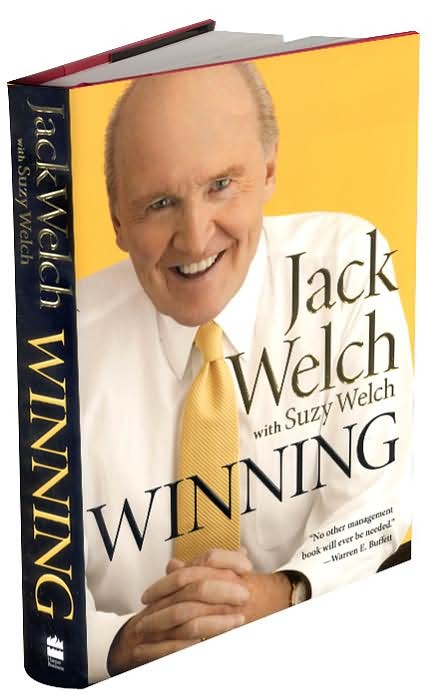
I just finished listening to Winning by Jack Welsh on my iPod.  The audio book comes on 9 discs and is read by the author, which is always nice.

Winning is about how to win in business and as a CEO of GE or General Electric for twenty years, Jack should know a trick or two.  The book is divided into four sections, each with its own focus.

The first section is called Underneath it all and talks about Jack’s fundamental believes in how to conduct business, manage people and run a business.  He talks about the importance of a strong mission and concrete values in a company, the absolute necessity of XXXX when working with people, the power of differentiation where people are valued for what they contribute and compensated accordingly and the value of each individual receiving voice and dignity

The second is called Your company and talks about people, processes and management within companies.  It goes over leadership, hiring, people management, letting people go, managing change and crisis management.

The third section is called Your competition and goes through the strategic side of companies.  The author goes over his views on how you create strategic advantages, how to device meaningful budgets, how to grow, both organically and through M&A and he also throws in a talk about Six sigma, which he has a special interest in.

The fourth section is about Your career and talks about career management.  It goes through finding the right job, what it takes to get promoted, what to do if you are working for a bad boss and the big question of life/work balance.

Finally there is a section called Tying up loose ends where Jack goes over a few topics that he couldn’t fit into the other sections and he also answers a few personal questions.

You can say that this book is like a mini MBA, first laying the groundwork then something about management, next comes strategy and finally career management.  At least that sounds very familiar to me.

Obviously Jack Welsh is one of the heavyweights in this game with well over forty years of experience so his advice should be sound.  The book was very interesting to me and quite entertaining.  Jack has examples of everything he talks about and that makes the book very practical and at the same time a very easy read.  I mostly listened to it before going to sleep and I have to admit that I fell asleep a few times without turning off the iPod but in other chapters I was so interested that I listened for more than an hour.

I would recommend this book to anyone in business and especially to people working for big companies, where it has the most applicability.  As I said it is an easy read (or listen) and approachable to anyone interested in winning in business.