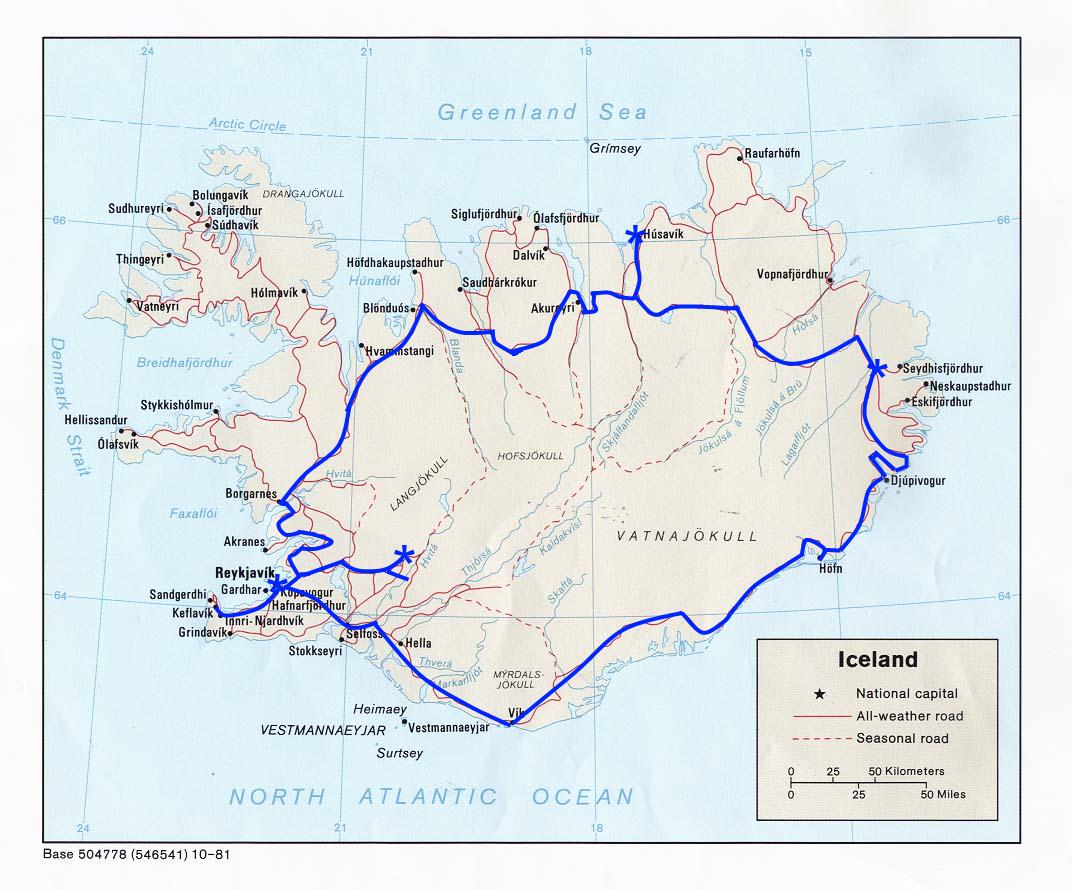
Luang Prabang in Laos

14 03 2010

Luang Prabang has been a great relief after all the all the noise in Hanoi.  As you might have heard the Lao people are extremely relaxed and I think that in the five days we have been in Laos only one scooter has honked its horn at us so it has been very relaxing!

The flight from Hanoi was very nice and we even had a nice dinner on board during the one hour flight.  Getting a visa was no problem, we had a minor scare though as we didn’t have any dollars nor Lao kip but the visa guys accepted Thai baht so in the end we were OK.

Luang Prabang is a very cozy town of about 50 thousand people, located on the banks of the Mekong river.  It is quite a beautiful town with a dominating French colonial style.  The relaxed atmosphere is quite dominating and you even have to wake up some of the tuk tuk drivers if you want them to drive you places :)
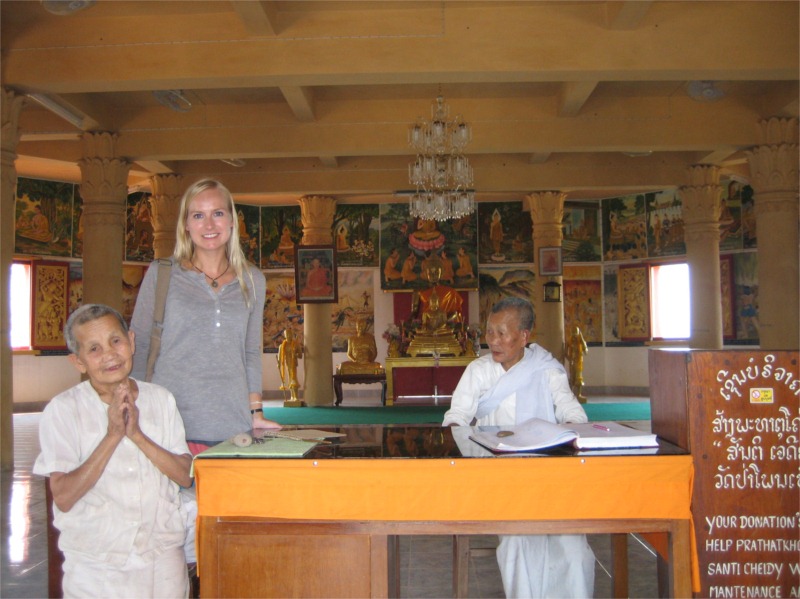
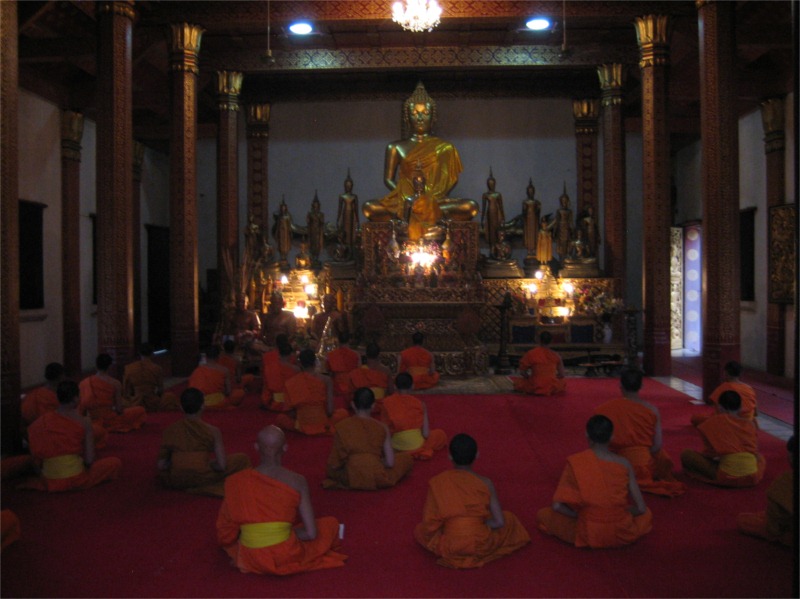
For the first three days here in Luang Prabang we have just soaked up that relaxed atmosphere and done next to nothing – just wandered around looking at the many temples in town, checking out the very nice night market and chilling in one of the cafés or bakeries here.  We met the Húsavík quartet again – just shows how small Asia really is – and here is a link to their Icelandic blog
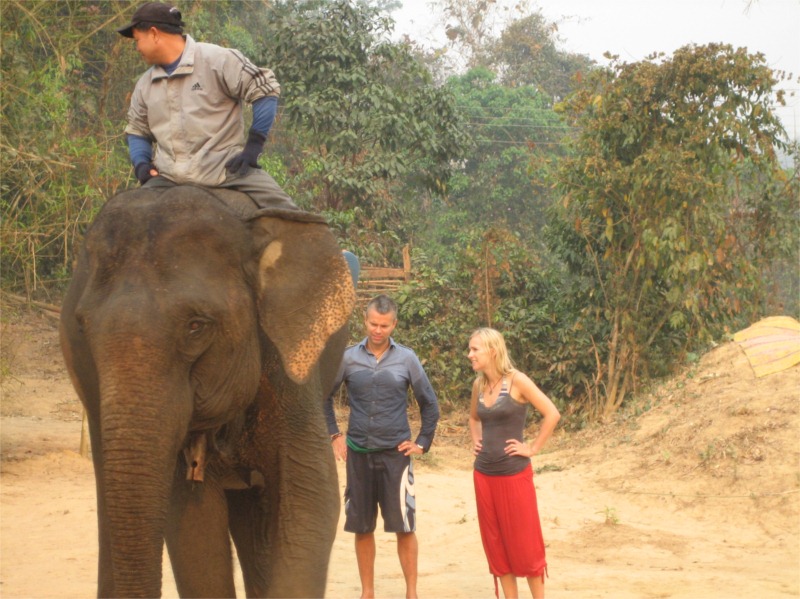
Laos has been called the land of the thousand elephants so it made sense to book a mahout training course (elephant trainer/rider) for Elínborg’s birthday.  We booked a two day training course with the Elephant Village, which seemed to us like the most trustworthy company in town.

The elephant village had nine elephant chicks and on the first day we got to ride the elephant on the saddle and after we got comfortable I was allowed to ride on the elephant’s neck.  After the first ride we had our mahout training, learned the lingo and how to control the elephant.  After lunch we were allowed to ride the elephants on our own into the jungle where they spend the afternoon eating their 200 kg. of greeneries before going to sleep (the elephant dongs are in proportion to what they eat :).
In the evening we joined a local party celebrating the opening of a new school in the village.  The party felt a bit strange and after two ladies asked me to dance, we left for the peace and quite at our restaurant.  We could hear the banging music from the party in our lodge well into the night …or at least until about 21:30 when we fell asleep :)

In the morning we went with the other mahouts and fetched the elephants from the jungle and took them for a bath.  Bathing the elephants in the river was so much fun – they are such delicate and fantastic creatures and so much fun to be around.  This was possibly the most fun activity that we have done so far!

After breakfast we went back to Luang Prabang and are now waiting for the mini-bus to take us down to Vang Vieng.



Three months of blogging

12 03 2010

I noticed that I’m closing in on 3,000 visitors to the blog, excluding those that read the blog on facebook, after just over three months of blogging.  The blog will probably go over the 3,000th visitor mark today or tomorrow ;)  In celebration I went out and bought my self my own domain.  You can now use the blog.ornthordarson.com to get to my blog.

It has really surprised me how much I like to blog and seeing that people are reading my stuff.   I would be very happy if you would help me spread the word around so I could reach an even wider audience.  Just point people to blog.ornthordarson.com and I’ll try to take care of the rest.

I really want to get my readers more engaged and have them comment more and I’ll have to find a way to do that.  I have heard from a few but would like to hear from some others. 

Are there any topics that you would like discussed here?  Is there anything you would like to know about South East Asia or China as we head there?  I’ll be happy to write about any topic and offer my opinion and maybe first hand knowledge.  Just send me a comment in any language – I’ll use Google translator if I don’t understand the language my self :)


The Way of the World by Ron Suskind

11 03 2010

WayOfTheWorld The Way of the World: A Story of Truth and Hope in an Age of Extremism by Pulitzer price winning and bestselling author Ron Suskind is a very interesting and captivating book that covers topics that might seem dry and uninteresting to most people but the author manages to bring the story to life.  The book tells the stories of a few individuals: a Pakistani emigrant, Afghani exchange student, UN refugee commissioner, a CIA officer and Benazir Bhutto, the former prime minister of Pakistan,  in the post 9/11 era of Bush’s War On Terror.

The individual stories all circle around three main topics, namely the Iraqi war and Iraq’s alleged possession of weapons of mass destruction, the fight against terrorism in Afghanistan and Pakistan and thirdly the danger of terrorists acquiring and using weapons of mass destruction, mainly nuclear weapons.

The authors main message is that America has has lost its way in international politics and how the nation is perceived abroad.  Once it used to be a country that all others admired and deep down everyone wanted to live the American values of freedom, honesty, integrity, truth and justice for all.  But over the years, the author argues, America has strayed away from those values, both domestically and abroad.  This is the main reason America finds it self in the middle of an unwinnable war – the war on terror.

The way out of the mess America finds it in, according to the author, is to get back on that moral high ground and start living its own values that built America and made the country what it is.

I listened to the book in a audio book format and it was wonderfully read by Alan Sklar.  The book was interesting and very captivating all the way to the end.  The topics discussed in the book are not topics that I’m particularly interested in but never the less the book was very interesting and informative.  I can’t say whether all the author’s sources are good ones but after listening to the book I have to agree with the author’s main conclusion that America will be far better off if as a country it goes back to living the values of honesty, freedom, integrity, truth and justice for all – all the time, not just when convenient.


Hanoi City

10 03 2010

We arrived back in Hanoi from Halong Bay on a Sunday and after learning that all the museums and some pagodas would be closed the following Monday (like any other Monday) we decided to visit the Perfume Pagoda, which is up in the Marble Mountains, about 70 km. outside of Hanoi.

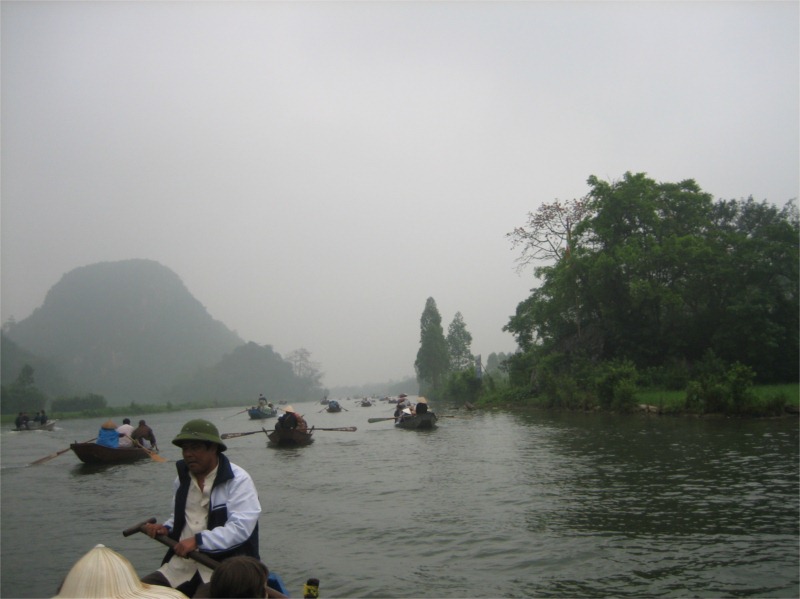
The perfume pagoda is a natural limestone cave with a fully fledged altar and everything.  To get to the pagoda we took a bus for two hours, went in a rowing boat for one hour and walked up the mountain for forty minutes so you can imagine the anticipation.  I’ll let the pictures speak on how beautiful the pagoda really is.  Going to the Perfume Pagoda to pray and give sacrifices to Buddha is supposed to give you good luck, good health and prosperity for the whole year and if we get any of that, the effort is surly worth it. 

The main attraction for us on this trip though was to watch all the Vietnamese tourists visiting the pagoda.  The guide said that the days before our visit the pagoda was visited by over fifty thousand people each day but we were visiting on the twenty third day of the newly started lunar year and odd days are not as good for visiting the temples according to local legend so we escaped the crowds.  We were especially interested in the many restaurants that lined the pathway.  The local specialty here seemed to be some kind of soup with fresh meat in it and the meat was was on display in front of the restaurants so that the guests could ensure its freshness.  For the soup there was a choice of beef, deer, cats and dogs – all sounding delicious but we took a pass for this round.

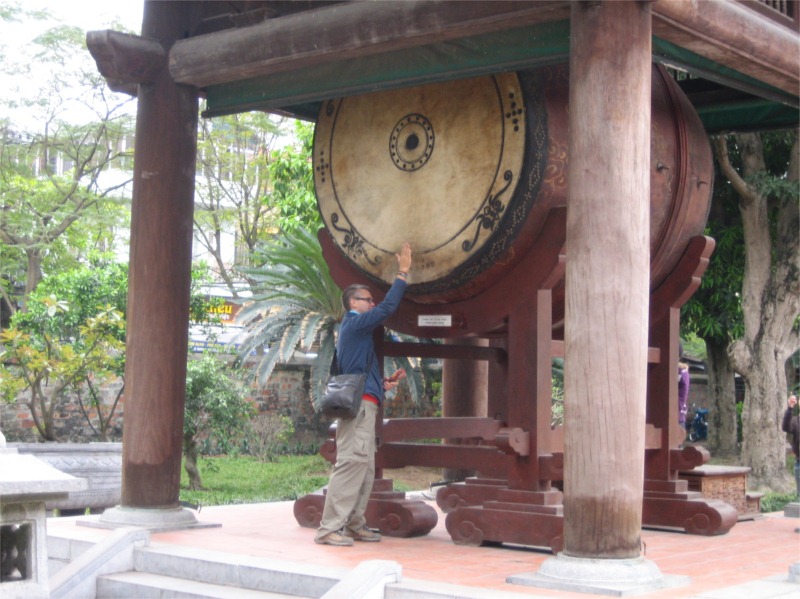
There are a lot of trips that you can make out of Hanoi, either daytrips or 2-3 day trips but we have been told that the city it self is nothing special.  Never the less we walked a bit in the old town and visited the Temple of Literature (where they, like professor Dumbledore, seemed to like the Phoenix an awful lot), which was nice, but in the end we totally agreed with what we had been told.  Hanoi is a bit like an overgrown village with endless narrow streets where people are selling anything and everything and scooter after scooter.  Hanoi has no big city feel to it event though there are five million people here, at least not where we went.

We had planned to stay until the eleventh but changed our flight ticket to Laos and we left two days early for Luang Prabang in Laos – town we have only heard the nicest things about .


Hue and Halong Bay

8 03 2010

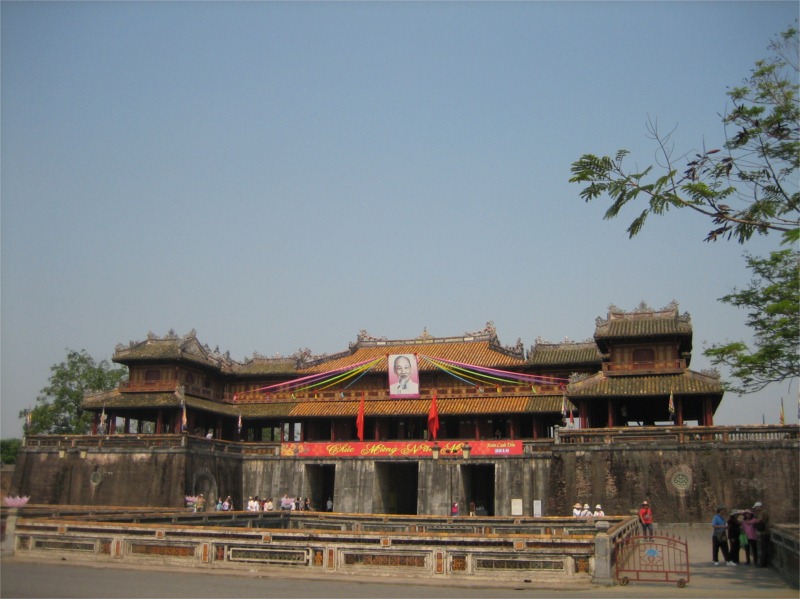
Last time I left you, we were on our way to Hue to see the Emperors Palace and the Purple Forbidden City.  In short, we only stayed in Hue one day and the palace and surroundings were a big disappointment.  I had read that during the Communist era most old ruins had been left to rot or at least not restored nor properly maintained.  The goal of the communist revolution is/was to build a new, better society that is not hampered by the burdens of the past.  The citadel was also heavily bombed by the Americans during the Vietnam was and maybe the Vietnam government wanted to keep the place in a bad shape as a monument of the destruction by American bombs?  At least the whole citadel was a bid depressive but at least we could see that now they have stared on a big restoration project so hopefully the site will be back to full glory in a few years time.

We took the fourteen hour sleeper bus up to Hanoi that arrived just before seven in the morning.  We moved quickly and booked a three day, two night trip to Halong Bay, departing at eight o’clock that same morning. 

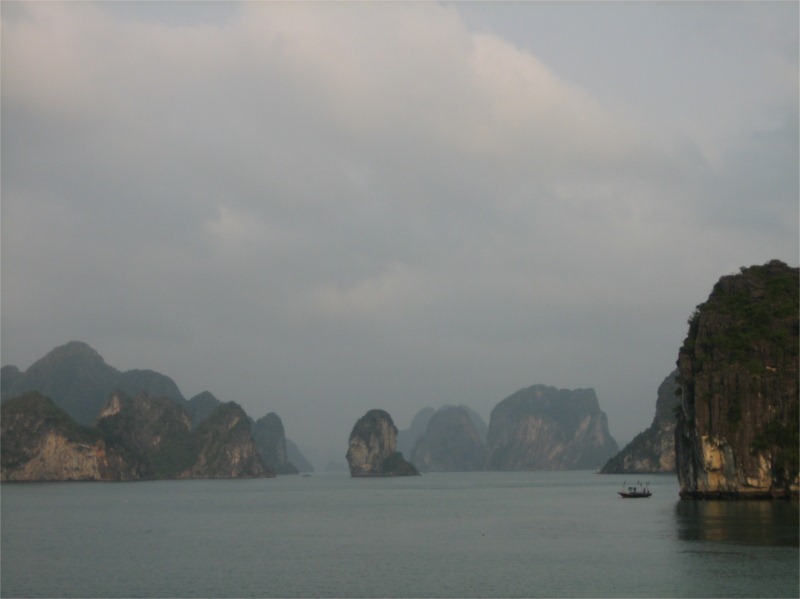
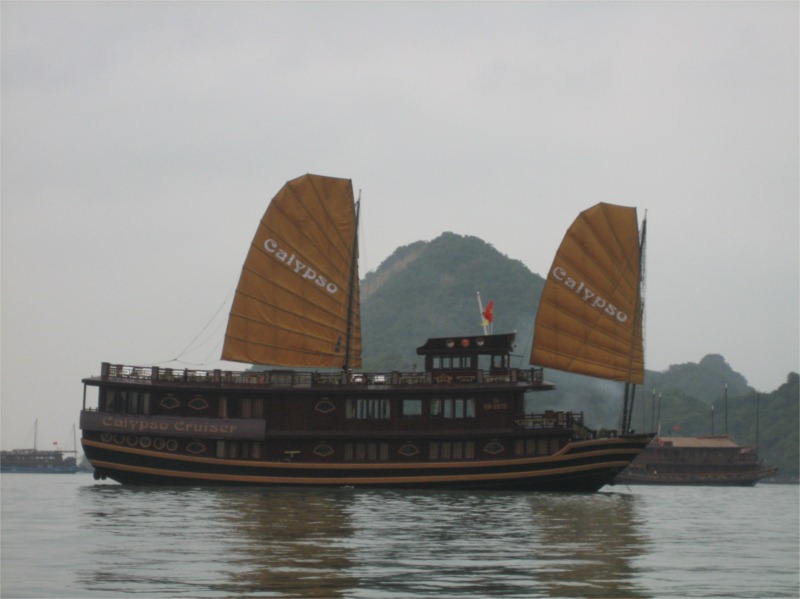
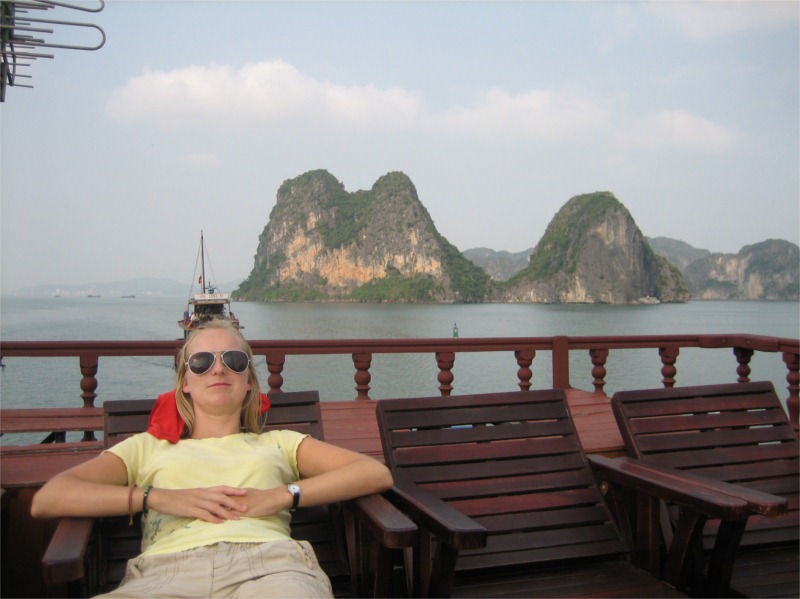
Halong Bay is about 170 km. from Hanoi.  It is a UNESCO World Heritage site, a beautiful bay with just under 2,000 majestic limestone-cliff islands scattered around the bay.  We took the bus to Halong City (with a stop in a souvenir store of course) and there we boarded a nice three star Chinese junk with eleven other passengers and a crew of six.


At first it felt like stepping into a ski-lift, going out on that boat.  At any one time there are about 300 similar passenger boats sailing around Halong Bay and they all have similar schedules so we could always see a few boats behind us and a few ahead of us, all heading in the same direction. 

But we were quick to shake of the ski-lift feeling.  Sailing around the bay in those old looking boats is soooo relaxing and nice.  The bay is very quiet and the scenery is so astonishing that you get the feeling of moving around in slow motion.

We visited a big cave on one of the islands, went kayaking and visited a floating village where the people live in houses build on rafts and underneath they have enclosures filled with fish, squid and lobsters that they feed until they are big enough to eat.

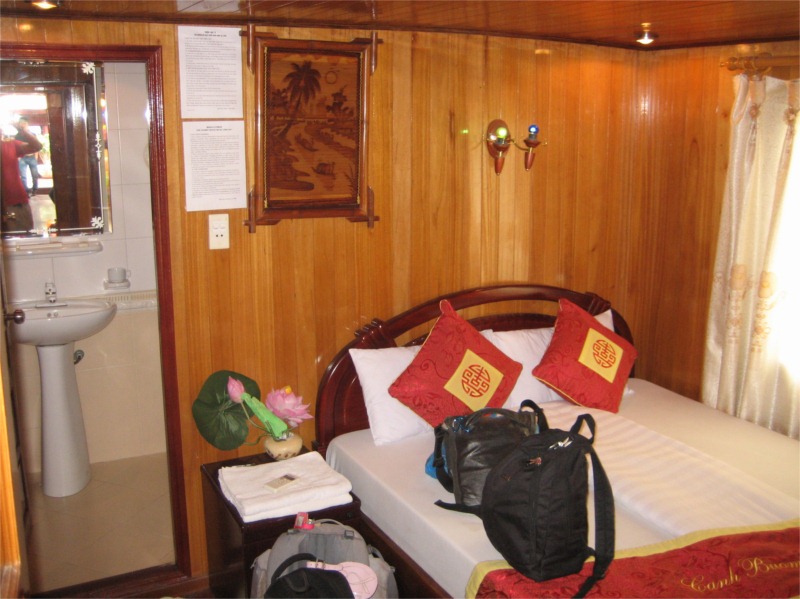
The first night we slept on the boat but on the second day we went to Cat Ba Island and stayed in a nice new hotel in Cat Ba town.  In hindsight we should have stayed two nights on the boat though.  The hotel in compared to how nice it was on the boat.

We were picked up the next morning and sailed quietly back to Halong City where we took the bus back to Hanoi (with a stop in a souvenir store of course).

All in all the tour was great, the scenery was fantastic, the food was good and the accommodation cozy and nice.  Our only complaint was our tour guide.  I’m not really sure that he knew that he was our tour guide, he acted more as a cowboy herding us, the money cows, from place to place.  He never told us anything interesting, never informed us of the schedule until the last minute and was just plain rude at times.  But he wasn’t enough to ruin a great trip though.  For people considering to take a similar trip I would recommend taking the two day one night on the boat option on a three star boat or even three days two nights on the boat option.


The Big Switch by Nicholas Carr

8 03 2010

bigswitchcover2thumb By accident I picked up The Big Switch – Rewiring the world, from Edison to Google by Nicholas Carr.  I had nothing to read and saw the book laying at one of the hotels we were passing through without knowing anything about the book beforehand.  I really liked the book as it got me thinking about things that I hadn’t given too much thought before – and a bit of thinking is always good :)

In this the book the author discusses where computer technology and the internet are heading in the next few years. 

In the first part of the book the author talks about the development of electricity, how the production and distribution of electricity moved from a decentralized model where each company produced it’s own electricity to becoming a general utility delivered through a centralized network that anyone can tab into, cheaply and effortlessly.  The author then argues that computers, hardware and software and services, are heading the same way that electricity did – towards commoditization of IT.  This form of utility computing or cloud computing he calls the World Wide Computer – where computer networks talk together to create some form of a super computer for all to use.  We have seen this development in recent years with increasing number of services delivered “in the cloud” both to individuals and corporations.

In the second part of the book the author discusses what these changes really mean in a social and economic context.  He argues that today it might be the public that is profiting the most from the World Wide Computer through free services like facebook, Gmail and others.  But in the end everything is money driven and corporations will get a hold of this new arena, maybe at our expense.  However the development will unfold the change to utility computing will profoundly change our society as much as electricity did in the 19th century.

As I said in the beginning, I really liked this book as it brought ideas to my attention that I had not thought that deeply about before.  Even though you might not agree with the author on every point, the book is an interesting read that get you thinking about the future of the internet and computing in general and give you an idea about where future opportunities might await and what to avoid.

I would say that this book is a must read for all IT professionals.  It should also be very interesting for people interested in the internet and want to keep up with the latest development.  It is very accessible without much technical jargon so anyone should be able to pick it up and read – and enjoy.