Sihanoukville

12 02 2010

We are now in Sihanoukville, a port city that connects Cambodia to the Gulf of Thailand.  It is a nice town with a few beaches, nice restaurants and a lively nightlife.  The town seems to be in some sort of a transition, I think it is about to become popular but hasn’t quite gotten there.

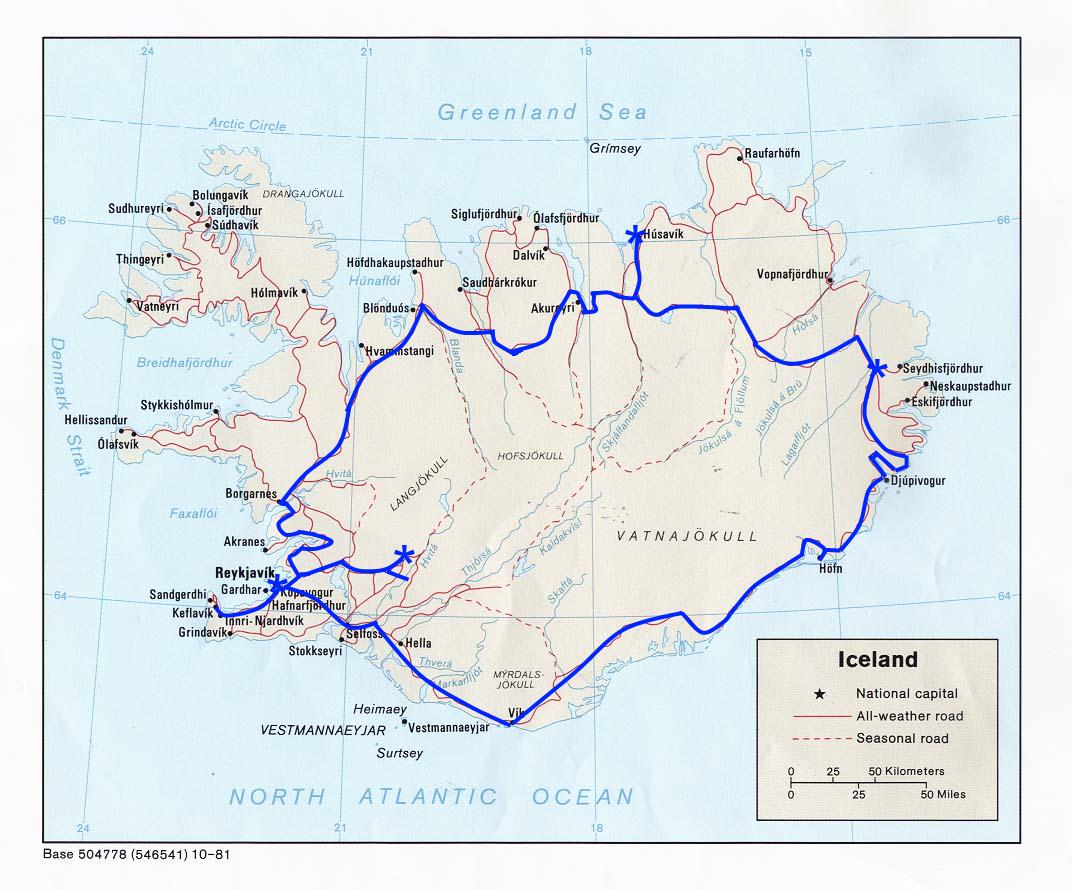
Last night we met four Icelanders: Halla Marín, Jóna Dagmar, Ingvar Björn and Ármann Örn – all from Húsavík.  We knew that they were in Siem Reap at the same time as us but weren’t able to meet.  This time we were just walking on the beach and they recognized us right away.  It was nice meeting some Icelanders, sharing travel stories and plans for the next steps.  They had been in Indonesia, Malaysia and Singapore before they came to Cambodia so they have had quite a different route from us.

Tomorrow we will head to Vietnam, to Phu Quoc island to be exact.  We hope that the Chinese New Year won’t give us too much trouble.  New Year’s day is on the 14th, when year 4707 begins according to the Chinese calendar, the year of the tiger.  We have read that the whole country stops to function during and after the new year, the trains for instance stop for 9 days but we hope for the best.  The new year is also big here in Cambodia and I was informed that the rate for our hotel room would double, the first three days of the new year so they are expecting a lot of visitors.

I have heard that some websites are restricted in Vietnam but I hope that I’ll be able to continue blogging and posting pictures.  I know it is possible through email so that is one option.  Bear with me if the posts will look somehow funny.

It would be great to hear from those reading the blog.  I have heard from some of you but I have no idea who are actually reading this blog.  I can see that there just over 200 visitors per week (excluding Facebook readers) but I don’t know who they are.  So lets make a deal, you commend and then I’ll post some more pictures ;)  My birthday is coming up on the 18th so that is a perfect opportunity to post a comment :)
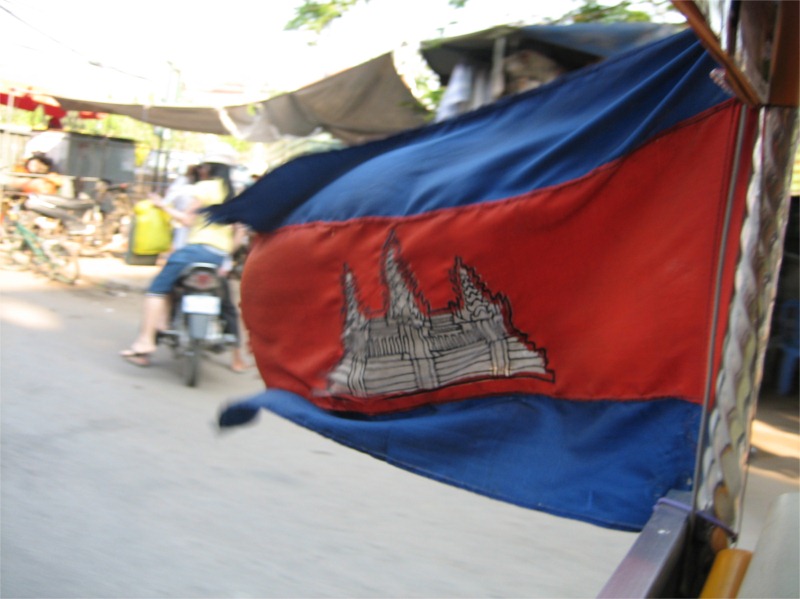


Cambodia – quick facts

11 02 2010

The Kingdom of Cambodia is a constitutional monarchy with a parliamentary representative democracy, just like Thailand.  The countries inhabitants are closing in on 15 million and the vast majority (90%) is ethnic Khmer and the dominating religion is Theravada Buddhism.

Cambodia is about the size of Switzerland but quite flat and is dominated by the Mekong and a lake called Tonle Sap (Great Lake) that grows ten times its regular size during the wet season.  Rice production and other agricultural products make up the biggest portion of the economy with textile and garments production and tourism having a substantial impact as well.  There is hope that there is oil beyond Cambodia’s shores and with that comes fears that the oil profit will be snatched up by corrupted politicians and their compatriots.  The economy has been growing about 10% a year for the last few years but in nominal terms that is not much as the GDP per person (ppp) is about $2,000, half that of Thailand but only around $800 in nominal terms.

Cambodia has had a big problem with deforestation.  In seventies around 70% of Cambodia was covered with primary rainforest but that number is down to around 3% today.  We can definitely see that when driving around in Cambodia, everywhere we go there are just dry plains waiting for the wet season so that they can be used for rice production.  This is a big difference from Thailand where it was not uncommon to see “wooden”  furniture and houses made of concrete and then painted like wood because of the strict Thai laws regarding deforestation and timber production.  In Cambodia however we see a lot of beautiful beds, chairs and tables made from the finest hard-wood available.

1999 was the first full year of peace in 30 years in Cambodia and since then the economy has been growing fast, security is getting better and better, resulting in more tourism and increased foreign investment so Cambodia is definitely going places, which is fantastic.  I just hope that this all will benefit the general population because the people have been through so much in the past and still they are so sweet and gentle.


Phnom Penh – the sad part

10 02 2010

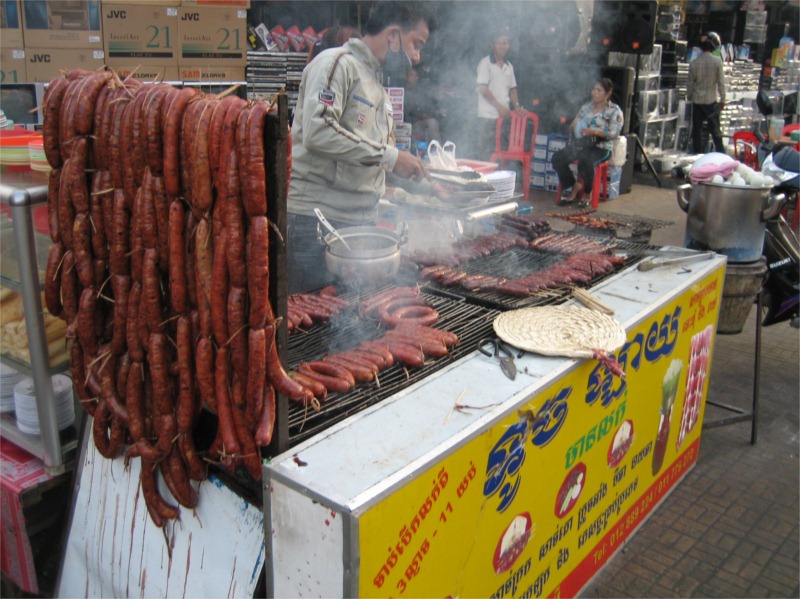
Today we started the day early and went to the biggest market in town – Psar Tuol Tom Pong or The Russian Market.  This is a local market for local people, selling things that the local people need like food and groceries, scooter parts, stationary, baby clothes and the like and then they throw in some tourist stalls with silk, statues, watches and jewelry.

We came equipped with a map and saw that they had food in the middle of the market.  We hadn’t had any breakfast so we went straight for the food section thinking that this would be a nice, cozy food court – something that reminded of a western mall.  Of course we were dead wrong.  The food section contained butchers with whole chickens, chopped down pork and whole fish.  Since we were early the sellers were still chopping away and cleaning their products so you had to watch out not to get covered in guts and blood – it reminded me a bit of my days at the Húsavík slaughterhouse.

After some search we found where they were offering cooked food and grabbed delicious waffles for breakfast.  We walked through the maze of stalls for a couple of hours but didn’t see anything that we fancied carrying in our bags for the next month.  We therefore headed towards the horrific Tuol Sleng or S-21 prison turned into a genocide museum.

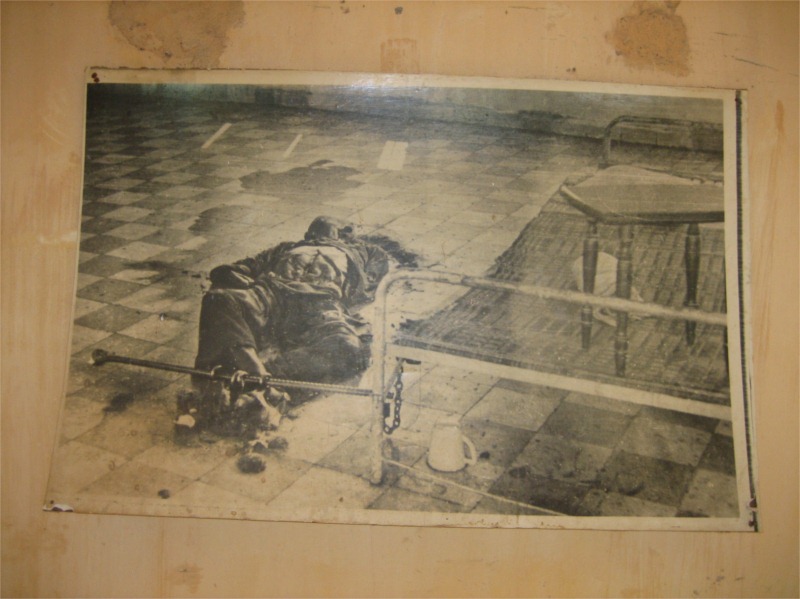
Tuol Sleng was a high school until the Khmer Rouge, under Pol Pot, turned it into the notorious Security Prison 21 (S-21).  The majority of the victims buried in The Killing Fields were prisoners at Tuol Sleng.  After the fall of the Khmer Rouge in 1979 it was made into a genocide museum, displaying the horrific things that went on during the Khmer Rouge regime.  The museum stands as a constant reminder of the past in the hope that those things can never happen again.

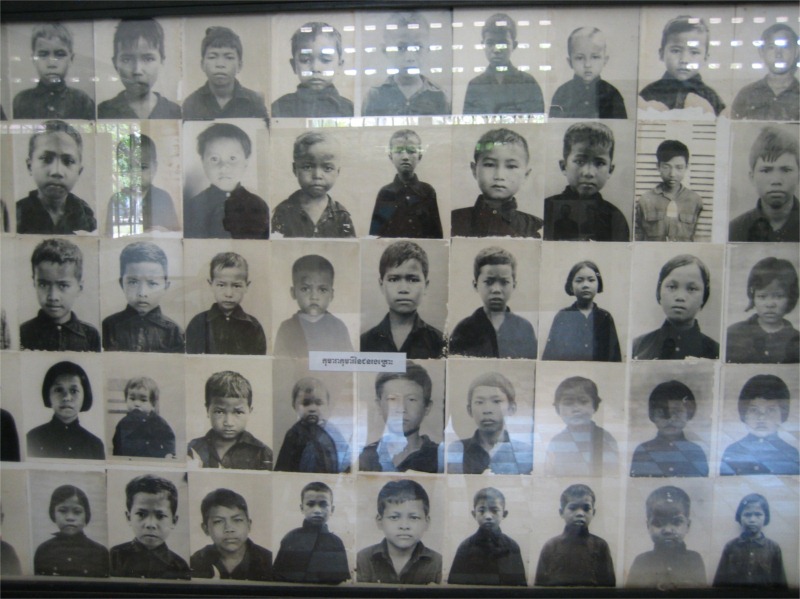
The museum hasn’t been changed much since it served as a torture prison and we were able to walk around the whole site.  The prison cells still had the original beds, chains and even blood stains on the floors and ceilings.  The torture instrument were still present and signs and pictures showed how they were used.  This museum leaves no one untouched and seeing the pictures of the victims made it all so real – I don’t think any other place I’ve been to has given me such negative vibes as S-21.  It is impossible to understand how and why such things can happen – and not that long ago.

We had decided to stay in Phnom Penh until we can enter Vietnam on the 13th of February but changed our minds and are now going to Sihanoukville in the morning where we will have beaches and relaxation again.  We are also trying to set up our route so that the Chinese new year on the 14th won’t hinder us too much.


Phnom Penh – the fancier part

10 02 2010

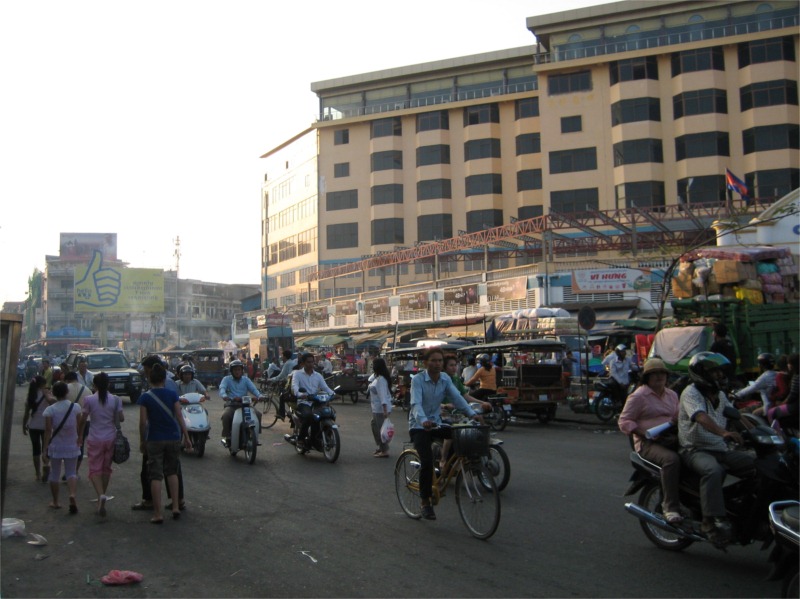
Phnom Penh is leaving us exhausted.  It is dirty, it is loud, the traffic is chaotic and we are constantly being asked if we need a tuktuk and if not – do you need one tomorrow, Sir?  – why not? – how about The Killing Fields, Lady – I give you good price? 

While we were very impressed by how the Thais would allow us to look at the items they were selling and we had the feeling that we were buying stuff rather than being sold stuff, the Cambodians are constantly trying to sell us things so we take care not to stop too long looking at things unless we are serous about buying.  If we linger too long, they start pulling out all sorts so stuff we had no interest in and try to get us to buy something …anything.

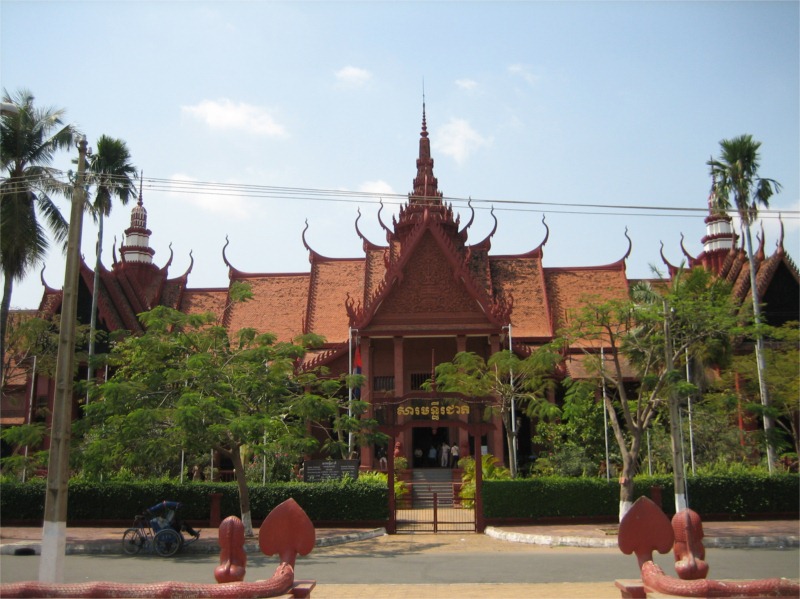
Yesterday we went to see the National Museum, next to the Royal Palace.  It contained mostly artifacts from the Angkorian era taken from around Siem Reap but also a few pre-Angkorian artifacts as well as later stuff.  The museum it self is in a beautiful building that by it self is worth the visit.  The museum was kind of small and took maybe a couple of hours to see everything, which is quite surprising considering the long and eventful history Cambodia has but I guess the ministry of culture does not have too much funds – the money is needed elsewhere.

After the National Museum we headed across the street to see the Royal Palace.  Admission was a whopping $6 per person – we were hesitant but went in anyway (yes, we’ve gotten so cheap by now :).  There were only two buildings that were available to us, the coronation room and The Silver Pagoda.  The Silver Pagoda is famous for the 500 kg of silver that decorate the floor of the temple and the two Buddha statues, first a 90 kg solid gold man-sized statue decorated with over 2,000 diamonds and a smaller a small 17th century baccarat crystal Buddha.  The buildings were nice but we felt that there was something lacking – it seemed like they were trying to make the numbers rather then creating a balanced and beautiful space.  Unfortunately photography was not allowed in those two buildings. 

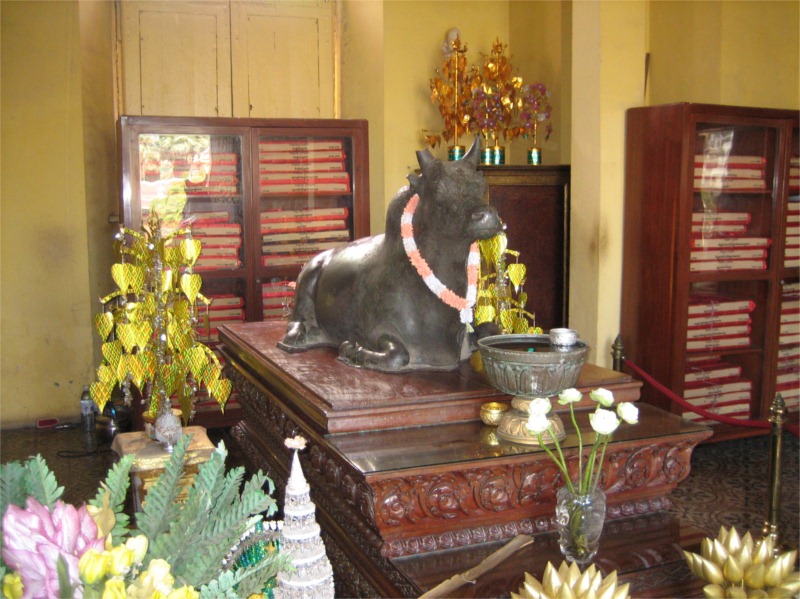
We were allowed to take photos in the shrine or temple that amused and intrigued me the most.  In that temple a sacred cow was worshipped.  We have all read about the Hindus considering cows (like all other life forms) to be sacred but to see a cow on the altar is something different.

The Khmer cuisine hasn’t kept the promise it made on our first night in Siem Reap.  I think that was our best meal in Cambodia so far.  They have a lot of noodle and rice dishes but the curries are not as hot as in Thailand and there is some ingredient they use that we are not loving so we are looking forward to trying something new in Vietnam.  We can even admit that we have had pizza once and a chicken burger once, not bad though for over three weeks of travelling?

I’ll tell you about our day today, when we went to the biggest market in town and the gruesome S-21 prison, in my next post.


New “Hostels and Guesthouses” page

9 02 2010

I just created a Hostels and Guest houses page with reviews of all the places we have stayed in.  The idea was to help people that are travelling to these same places and want to know what places to stay away from and what places to seek out.  You can find the page on the right hand side of the on the blog.

Tomorrow I hope to have an update on Phnom Penh.  We explored the Royal Palace today and the National Museum and tomorrow we are going for the biggest market in town and the Tuol Sleng Genocide Museum


New “What to pack?” page

8 02 2010

Hi all

I just added a new page for people that want to go on a trip like our’s and are wondering what to pack for the trip.  The link can be found on the right hand side of the blog or here below.

What to pack?